Case Study / Dell Technologies / 2022
Dell Developer Experience.
Owned the UX workstream from audit through MVP as Dell transformed an internal API Marketplace into a public-facing developer portal for API consumers, publishers, and partner developers.
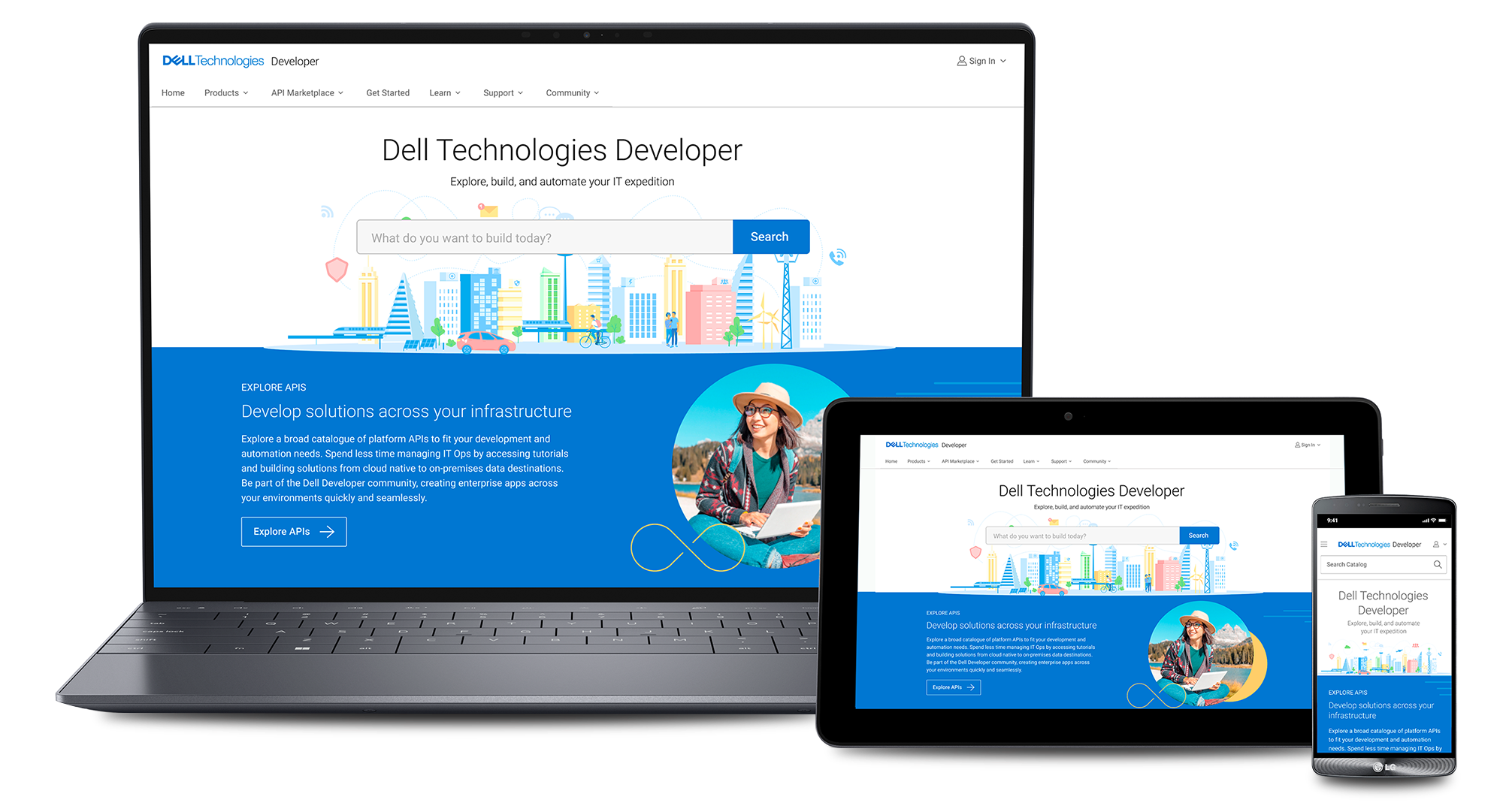
Dell's API Marketplace began as a closed internal system. As the company expanded its Everything-as-a-Service strategy, the experience needed to become a public-facing resource for people building products, integrations, and services that connected with Dell applications.
As the senior UX designer on the effort, I owned the UX workstream from audit through MVP in a balanced team with developers, IT architecture, and product ownership. The work included discovery, workflow definition, information architecture, prototyping, UI design, validation support, and product feature roadmapping while the legacy marketplace continued to operate.
- Design Sprints
- Affinity Mapping
- Site Audits · Surveys
- Contextual Inquiry
- Requirements Gathering
- Wireframing · Prototyping
- Competitive Analysis
- UI Design · User Validation
- VQA
01 · Discovery
Auditing the internal marketplace.
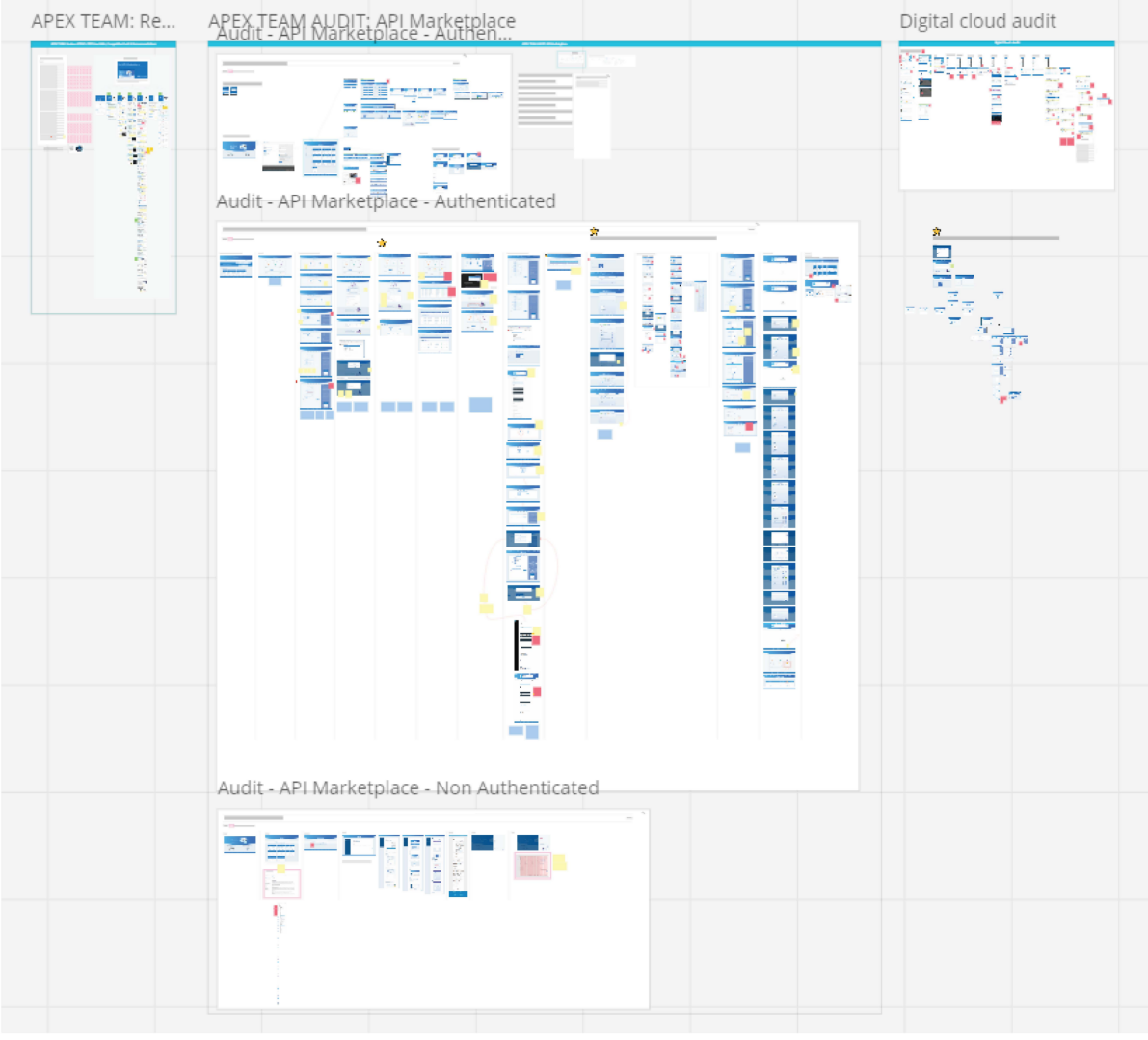
The internal marketplace had grown around internal needs, support workarounds, and enterprise complexity. Before designing the public experience, we needed to understand which flows were essential, which patterns created friction, and where users still depended on support teams to complete otherwise routine tasks.
Working with another designer, I audited the existing UI, reviewed prior research, synthesized user and stakeholder input, and documented open questions in Miro so product and engineering could align around the MVP scope.
- Subscription flow
- Publish flow
- Environments and gateways
- Privacy settings
- Support & administration
- Automation and self-service
02 · Research
Developer self-service pain points.
The portal needed to support internal developers, partner developers, API publishers, and API consumers. Across those groups, the core need was the same: find the right API, understand whether it fit the use case, test it quickly, and know where to look when something failed.
Painpoint 01
"I want to search, not browse."
Finding the right API quickly was critical — developers had urgent, specific needs and didn't want to peruse topics when they had a deadline.
Painpoint 02
"Show me docs, use cases, tutorials."
Users wanted easy-to-follow tutorials and use-case examples to implement an API quickly — or to evaluate one for use.
Painpoint 03
"Don't make me wait."
Users wanted to spin up and test an API in less than fifteen minutes. Waiting for permission access or support responses was their biggest bottleneck.
Painpoint 04
"Root cause analysis."
Users wanted to quickly understand why and how an API's performance could contribute to failures or major incidents.

03 · Validation
Public developer portal validation.
Moving from a private internal tool to a public developer portal meant the experience had to earn trust with audiences who did not already know Dell as a developer platform. The team needed to understand whether the portal felt credible, modern, and useful to developers outside the existing internal ecosystem.
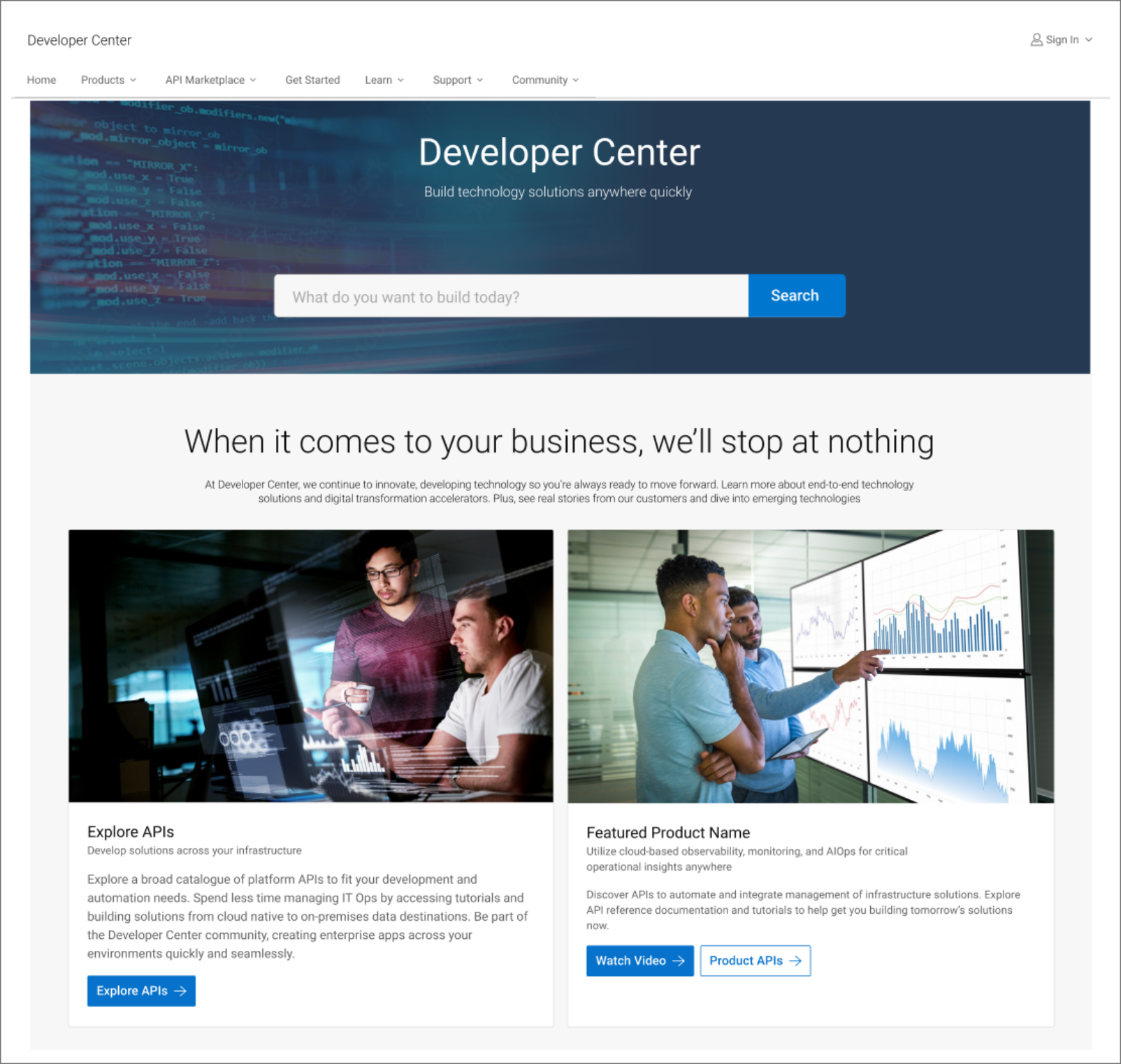
I partnered with the APEX Research Team on validation for two versions of developer.dell.com: one using the existing Dell design system, and one extending the visual language for a younger developer audience. To reduce brand bias, the research team tested unbranded Dell concepts alongside unbranded competitor developer portals, removing logos and company names so participants could evaluate the experience on its own merits.
The research team moderated the study while I observed sessions, reviewed findings, and used the results to inform the MVP design direction. The challenger direction tested strongest with the target developer audience.

Outcomes
What we shipped.
support interactions
user productivity
tickets
shipped
strongest with developers