Case Study / Capital Group / 2019
Capital Group Internal Tools & Early ML.
Modernizing internal financial-services workflows while exploring an early, privacy-aware machine learning pilot for document processing.
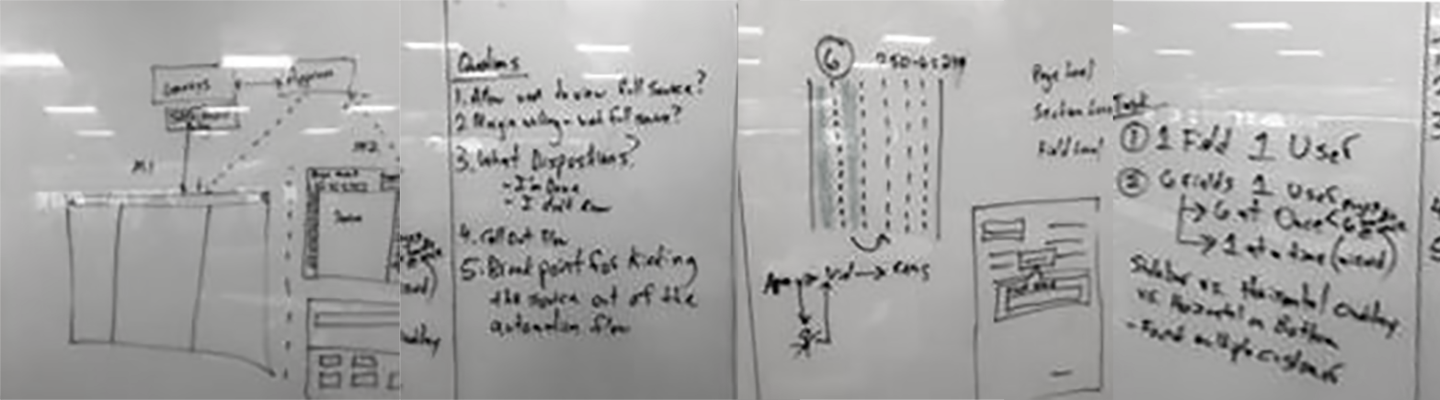
Capital Group is one of the world's oldest and largest investment management organizations, with more than $2.6 trillion in assets under management. I joined a UX team focused on modernizing internal applications used by account representatives and processing teams.
The work supported a migration from a 20+ year legacy Application of Record to a newer platform. The design challenge was not simply making screens cleaner; it was preserving the flexibility and operational nuance of workflows people depended on every day.
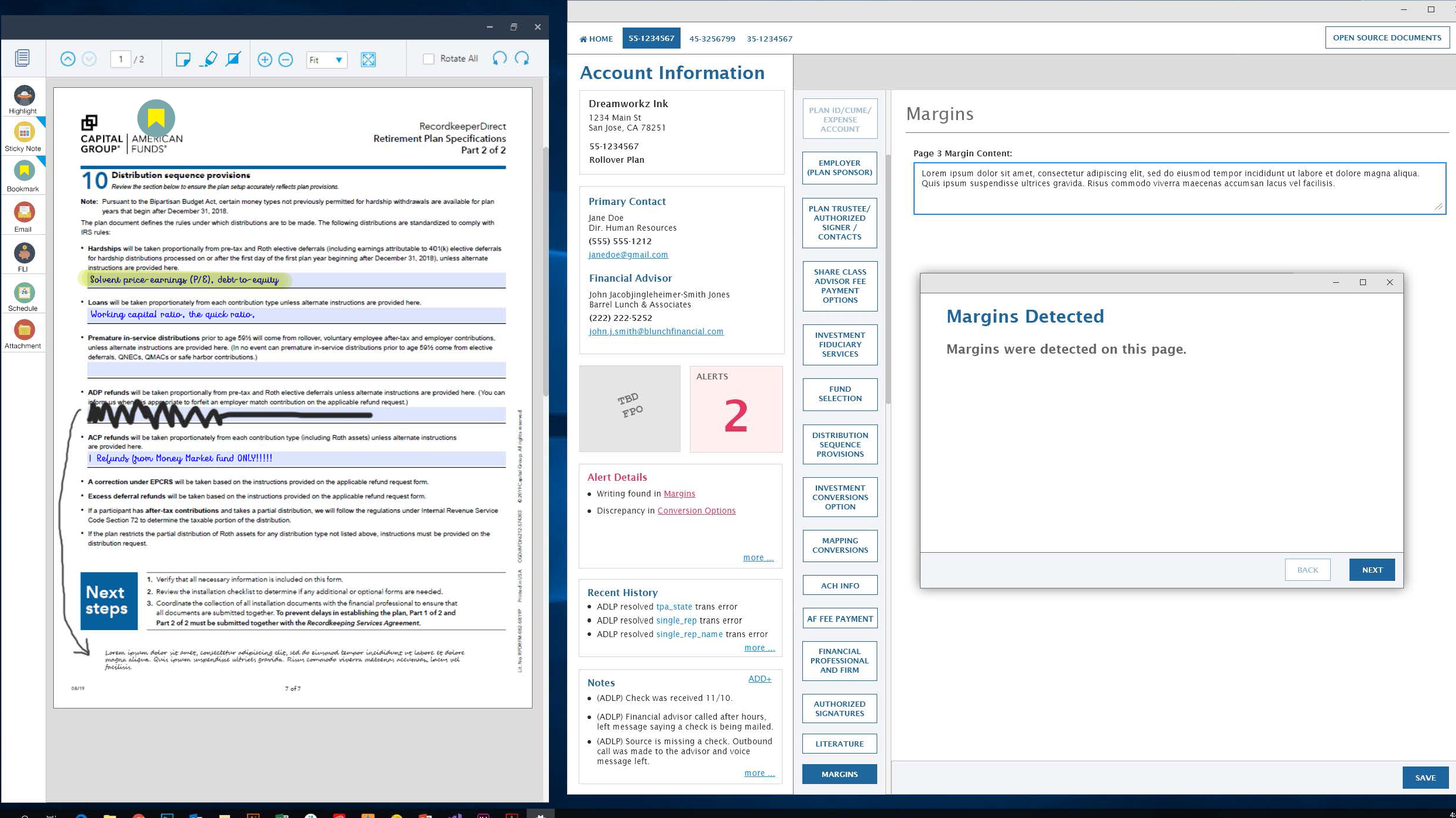
In practice, account-opening work had to accommodate imperfect source material: incomplete forms, handwritten notes, margin comments, and documents that could arrive closer to a napkin sketch than a pristine digital input. The product experience had to support that reality without exposing more sensitive account information than necessary.
- Workflow Mapping
- Requirements Translation
- Wireframing
- Prototyping
- Pilot Support
- Appian Framework
01 · Processing
Processing tools for messy inputs.
The legacy system was deeply embedded in how teams processed financial paperwork. Highly trained specialists spent significant time interpreting intent, resolving ambiguous fields, and deciding when a document was ready to move forward.
My work focused on execution: translating requirements and workflow constraints into screens, prototypes, and interaction patterns that could support a more modern internal toolset without forcing the business into a rigid intake model.
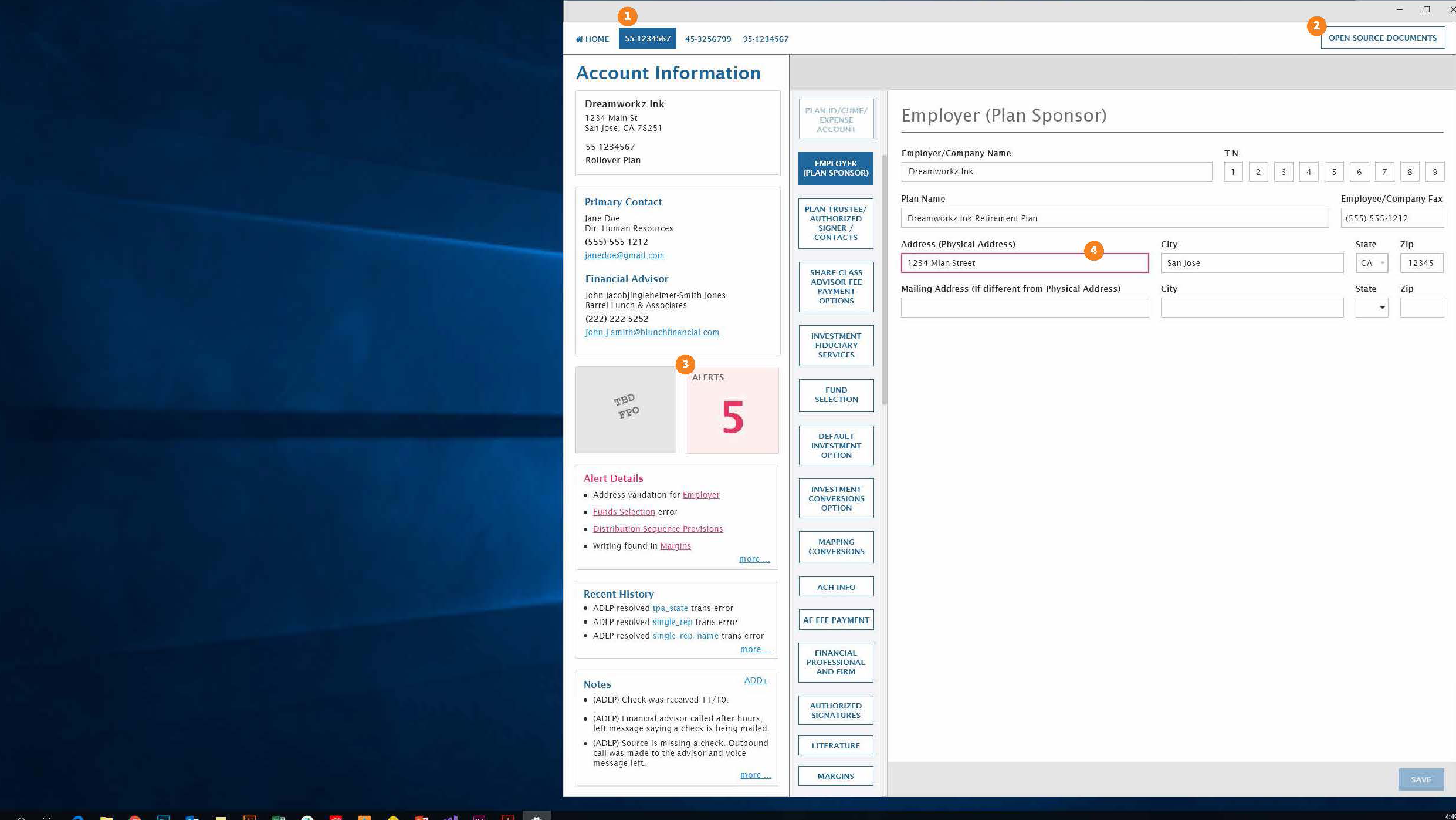
For retirement plan processing, the replacement experience had to work within the Appian framework while improving source-document visibility, markup, notes, and contextual error messaging. These tools supported the non-ML processing path: reviewers could set up account data, annotate digitized source documents, and escalate work when specialist judgment was needed.
- Reduce rework and re-touch count
- Protect PII and sensitive account information
- Support specialists and lower-risk review roles
- Shorten processing time against SLAs
- Escalate to financial specialists when needed
02 · Pilot
Early ML-assisted field review.
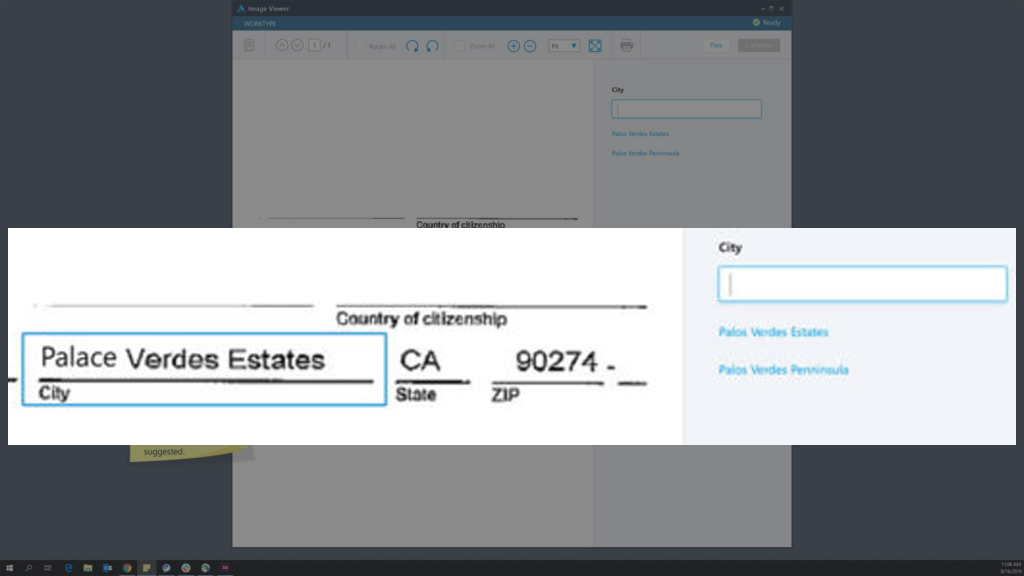
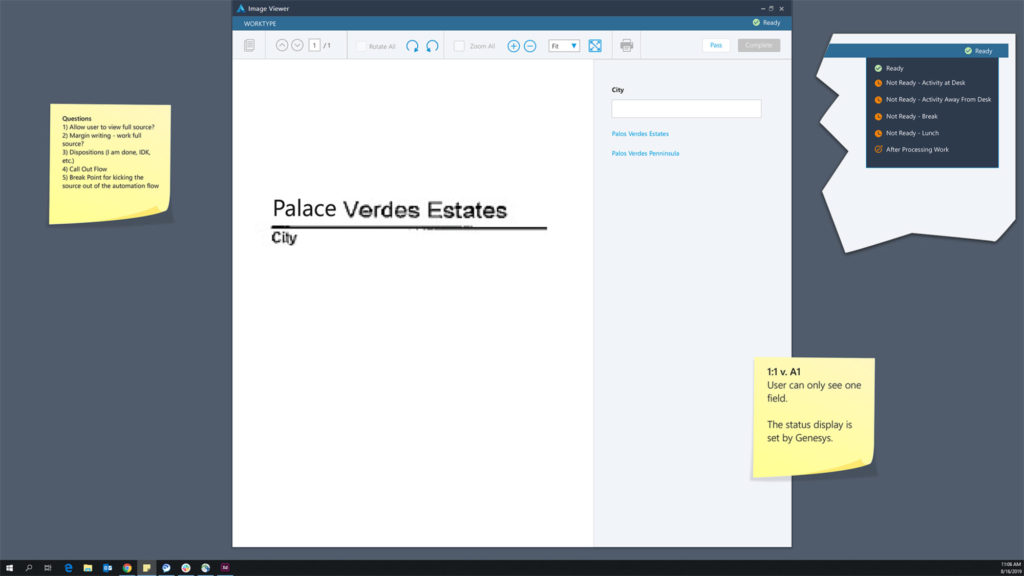
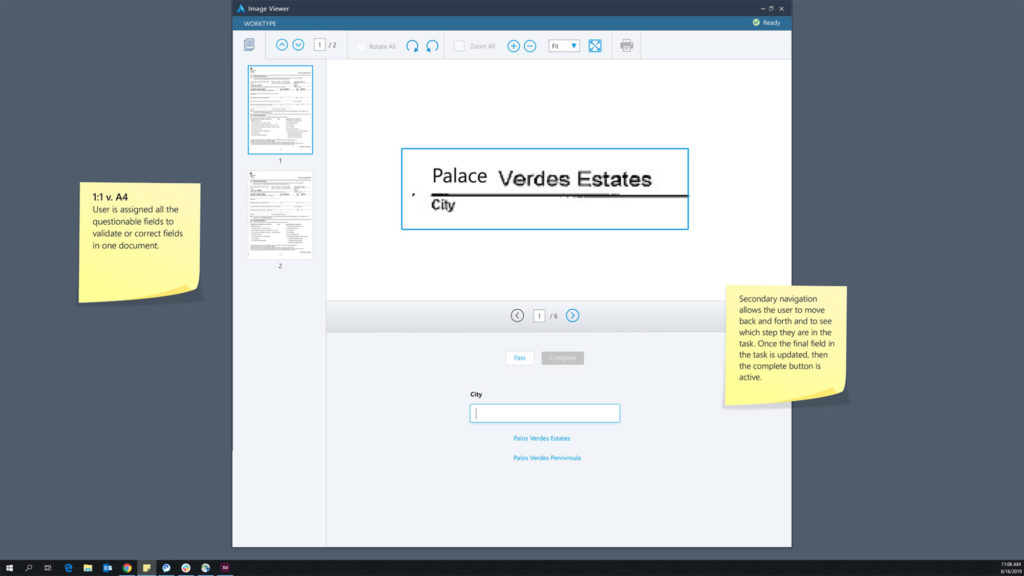
The pilot explored a privacy-aware, human-in-the-loop review pattern for digitized documents. Instead of routing an entire record to one person, the workflow could isolate a field-level fragment that did not expose unnecessary PII and route it for lightweight validation.
In 2019, this was early machine learning work: the system could make a best guess, ask a human to confirm or correct it, and use that feedback to improve confidence over time. For ambiguous cases, the workflow still needed a path back to a trained financial specialist.
Design principle 01
Validate fragments, not full records.
A lower-risk reviewer could answer a narrow question without seeing the broader customer account context.
Design principle 02
Let human answers improve machine confidence.
Human validation powered future ML guesses while preserving escalation paths for uncertain or sensitive cases.
Outcomes
What changed.
for enterprise workflows
system migration
pilot workflow
exposure reduced